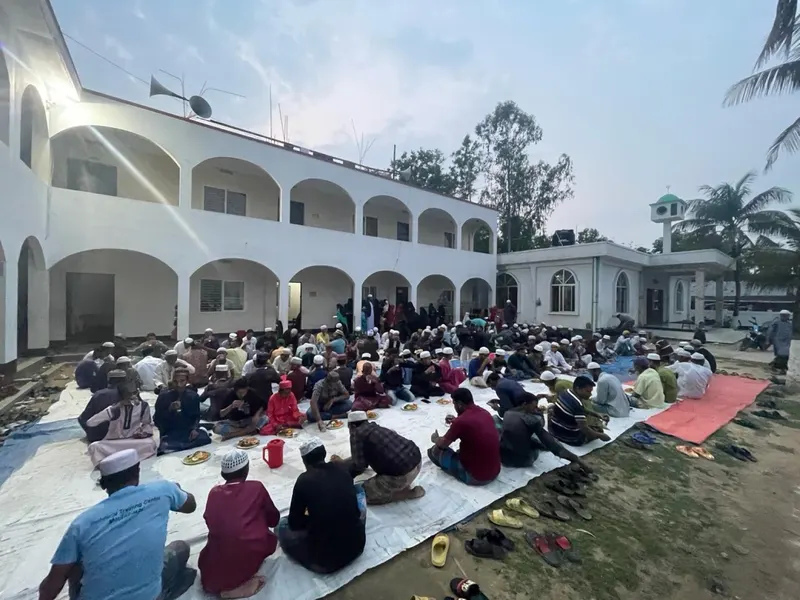
Fitrana: purify your fast and feed the poor
Fitrana (Sadaqat al-Fitr) is wajib on every Muslim, for themselves and their young children, and is paid before the Eid prayer. It purifies the fast and means the poor too have food on the day of Eid.
- 100% reaches the madrasa in Sylhet
- Secure card payments by Stripe
- A receipt by email

Supervised by Muftī Abdurraḥmān (ḥafiẓahullāh) Principal of Monuhorpur Anwarul Uloom Madrasa, Kulaura Shaykh al-Ḥadīth, Dārul ʿUlūm Ford Square Chief Mufti, Dārul Iftā London About him
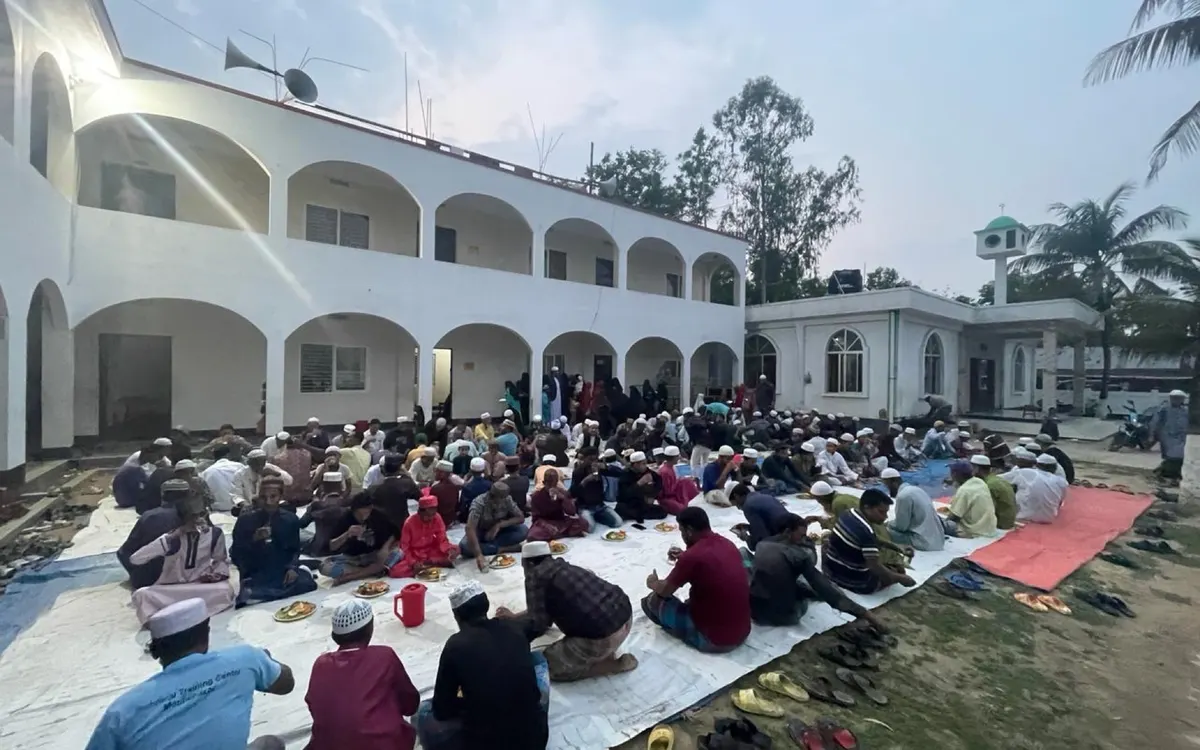
Where your donation goes
How your donation is distributed
Each £5 of Fitrana is the cash value of one person's Fitrana by the Hanafi measure. We convert it into Eid food parcels distributed before Eid prayer in Monuhorpur.
- £5 / person · matches the UK rate set annually by major Islamic councils.
- £20 / family of 4 · two adults + two children.
- Parcels include rice, lentils, oil, sugar and dates, enough for an Eid meal.
How your donation reaches Sylhet
Pay early: our cut-off is 24 hours before Eid prayer so parcels can be assembled and delivered overnight. If you pay after the cut-off, we still give it out as your Fitrana as soon as we can after Eid.
We confirm distribution by email within 48 hours of Eid. The parcels go to verified needy households across Monuhorpur and the surrounding villages.
About Fitrana (Zakat al-Fitr)
The Messenger of Allah ﷺ enjoined Zakat al-Fitr to purify the faster from idle talk and obscenity, and to feed the poor.
Sunan Abi Dawud 1609
- What is it?
Fitrana (also called Zakat al-Fitr or Sadaqat al-Fitr) is a wajib charity paid at the end of Ramadan, before the Eid prayer. In the Hanafi school it is half a sa' of wheat or flour (roughly 1.6 to 2 kg), or its cash value, for yourself and for each of your young children.
Ibn Abbas (may Allah be pleased with him) said that the Messenger of Allah ﷺ made it obligatory “to purify the faster from idle talk and obscenity, and to feed the poor”. (Abu Dawud)
- Who pays it?
Fitrana is wajib on every Muslim and is paid before the Eid prayer. A father pays for his young children. A wife or grown-up child pays for themselves, though the head of the family may pay for them with their permission.
- When is it due?
Any time during Ramadan, but it must be paid before Eid prayer. Paying early gives us time to get the food to families before Eid.
- How much?
Approximately £5 per person (UK). Confirmed annually by major Islamic councils. £20 covers a family of four.
What your donation does
Your Fitrana is converted into food parcels and distributed in Monuhorpur before Eid prayer, so the poor can wake up to a celebratory meal too. We confirm distribution by email after Eid.
Photos from the madrasa
-
A shared meal in front of the madrasa
-
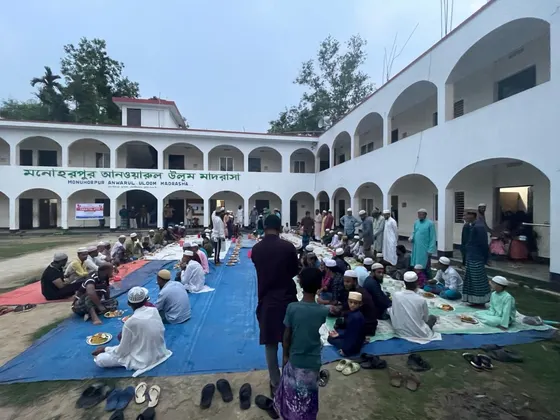
Students and neighbours eating in front of the madrasa
-
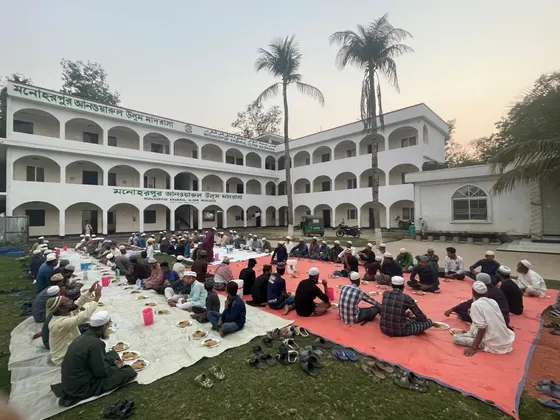
An evening meal on the lawn in front of the madrasa
Frequently asked questions
Is Fitrana the same as Zakat?
No. Zakat is on accumulated wealth (paid annually). Fitrana is due once a year before the Eid prayer, from every Muslim, and for their young children. Zakat is fard and Fitrana is wajib; they are separate duties.
Do I pay Fitrana for my children?
Yes, for your children who have not reached puberty. If a young child owns wealth of their own, it is paid from that wealth. You do not have to pay for your wife or adult children, but you may pay for them with their permission.
How much per person?
Approximately £5 (UK). In the Hanafi school the measure is half a sa' of wheat or flour, roughly 1.6 to 2 kg, or its value. UK scholars confirm the amount each year. We update our rate before Ramadan.
What if I miss the deadline?
Pay it as soon as you can. In the Hanafi school it stays owed until it is paid and the delay does not cancel it, but the reward of giving it on time is lost, and delaying it without reason is wrong.
For your annual Zakat on wealth (the 2.5%), see Zakat.