Fidya: feeding the poor for fasts you cannot keep
Fidya is the compensation paid by those who genuinely cannot fast, such as the chronically ill and the very elderly. For each fast missed, one poor person is fed two meals, or given the amount of one Sadaqah al-Fitr.
- 100% reaches the madrasa in Sylhet
- Secure card payments by Stripe
- A receipt by email

Supervised by Muftī Abdurraḥmān (ḥafiẓahullāh) Principal of Monuhorpur Anwarul Uloom Madrasa, Kulaura Shaykh al-Ḥadīth, Dārul ʿUlūm Ford Square Chief Mufti, Dārul Iftā London About him
Where your donation goes
How your donation is distributed
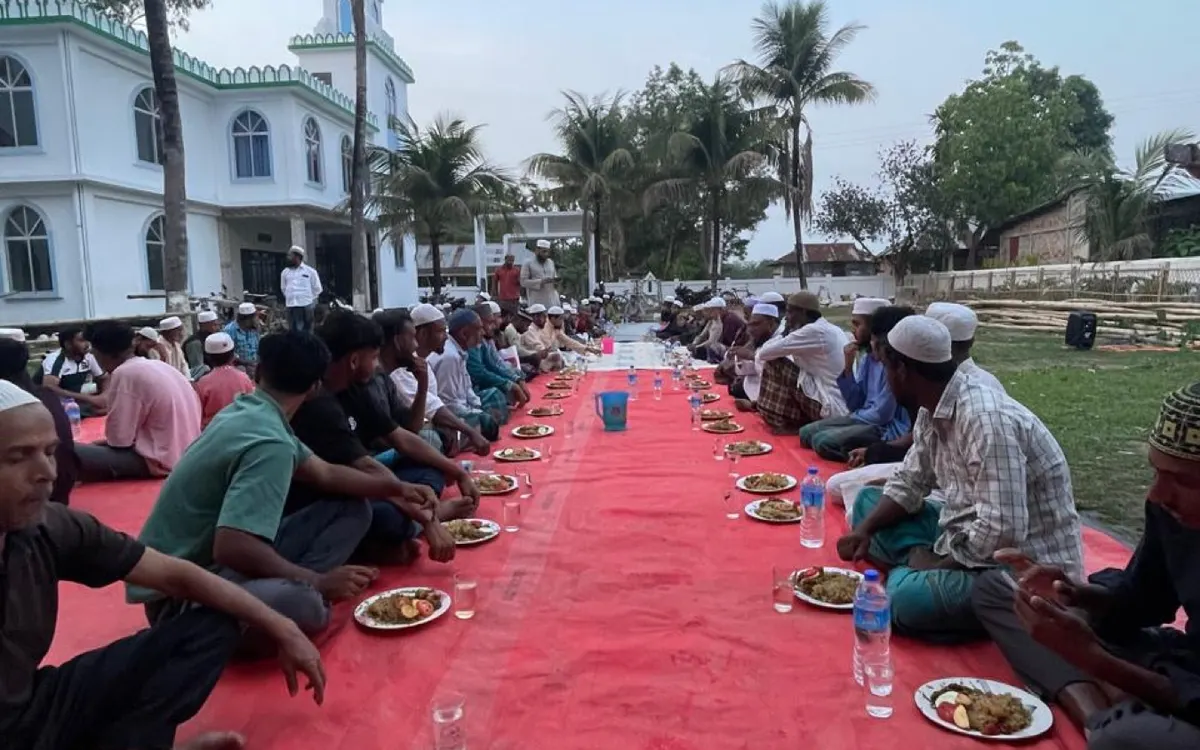
Each £5 day of Fidya pays for two cooked meals delivered to a verified needy household in Monuhorpur, matching the Qur'anic instruction to feed a poor person.
- 1 day = 2 meals for one household.
- 30 days = full Ramadan covered, feeding 30 different families.
- Spread across the month rather than given all at once.
How your donation reaches Sylhet
Fidya is given out as freshly cooked meals from our madrasa kitchen during Ramadan, the month of the fasts it makes up for. Pay any time before or during the month and we space distribution across the 30 days.
Confirmation by email when distribution is complete; households are anonymised in the report.
About Fidya
And upon those who are able [to fast, but with hardship], a ransom [as substitute] of feeding a poor person.
Qur'an 2:184
- What is it?
Fidya is paid by people for whom fasting has become permanently impossible through old age, chronic illness with no prospect of recovery, or terminal illness. For each missed day, you feed one needy person two average meals.
If recovery is possible (e.g. travel, temporary illness, pregnancy), fasts must be made up later instead; Fidya does not apply. If someone who paid Fidya later becomes able to fast, they must make up those fasts.
- Who pays it?
The permanently ill, the very elderly who cannot fast, and those with chronic conditions where fasting causes lasting harm. A doctor's confirmation is recommended for borderline cases.
- When is it due?
Pay as soon as it is clear that you cannot fast. Many people pay for the whole month at once, and we give it out during Ramadan.
- How much?
Approximately £5 per missed day in the UK (covers two average meals). For 30 days: £150. Pay per day or in a lump sum, your choice.
What your donation does
Your Fidya feeds students, orphans, and poor neighbours of the madrasa. We distribute meals in Monuhorpur, two meals for each £5 day of Fidya, and send confirmation once distribution is complete.
Photos from the madrasa
-
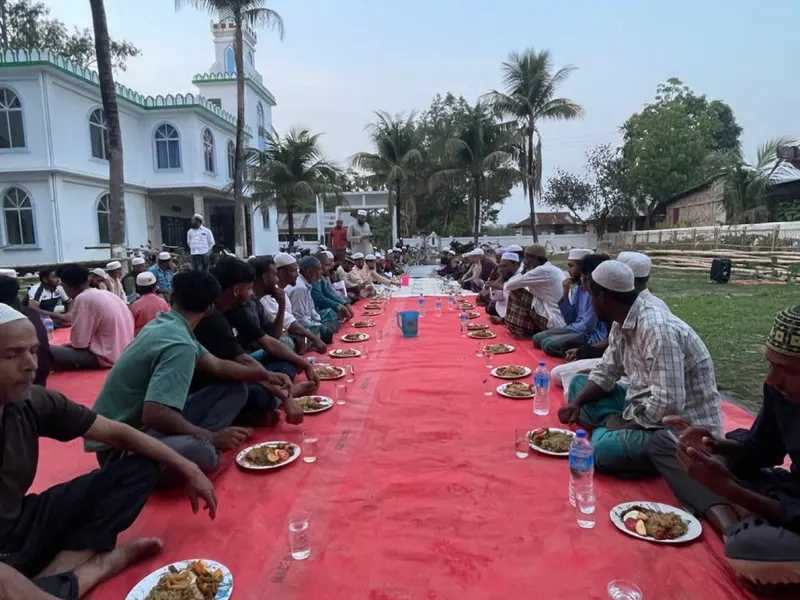
Rows of guests eating on the madrasa grounds
-
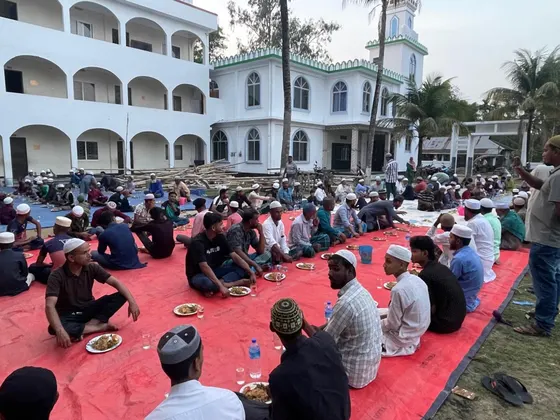
Students and neighbours eating together beside the madrasa masjid
-
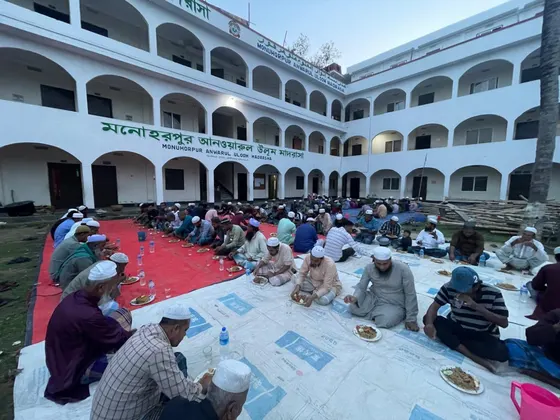
A shared meal in front of the three-storey madrasa building
Frequently asked questions
How much is Fidya per day?
Approximately £5 in the UK, the same as one Sadaqah al-Fitr, which covers two meals for one poor person. The exact amount tracks the cost of feeding someone two meals where the donor lives.
Can I pay Fidya for a deceased relative?
If a relative died owing fasts that they had the chance to make up but did not, Fidya can be paid for them. If they asked for it in their will, it is paid from up to a third of their estate; otherwise family members may pay it from their own money. If they were never able to make the fasts up before they died, nothing is owed.
What's the difference between Fidya and Kaffarah?
Fidya is for genuinely unavoidable misses (chronic illness, old age). Kaffarah is for fasts broken deliberately and is much heavier: fasting 60 days in a row or, only if you cannot do that, feeding 60 poor people.
If a fast was broken deliberately, Kaffarah is due rather than Fidya.