Our chairman
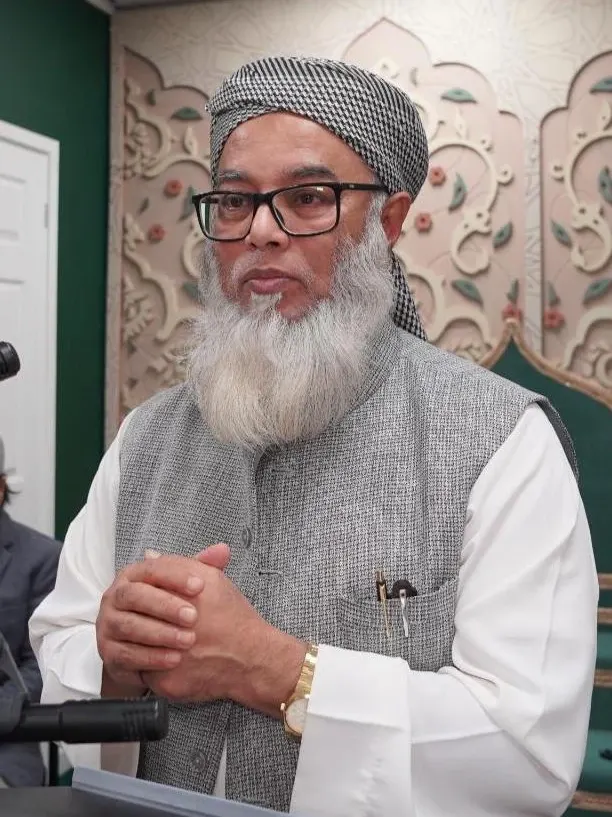
Muftī Abdurraḥmān (ḥafiẓahullāh)
Muftī Abdurraḥmān is a senior Islamic scholar and Principal of Monuhorpur Anwarul Uloom Madrasa, Kulaura, where he oversees the curriculum and the madrasa’s operations. He also serves as Shaykh al-Ḥadīth at Dārul ʿUlūm Ford Square and Chief Muftī of Dārul Iftāʾ London.
Institutional role
Role at Anwārul ʿUlūm Madrasa
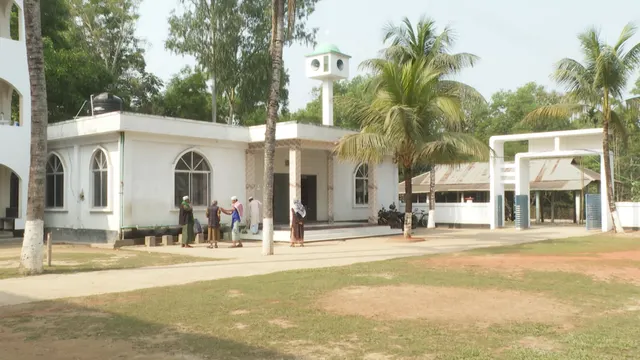
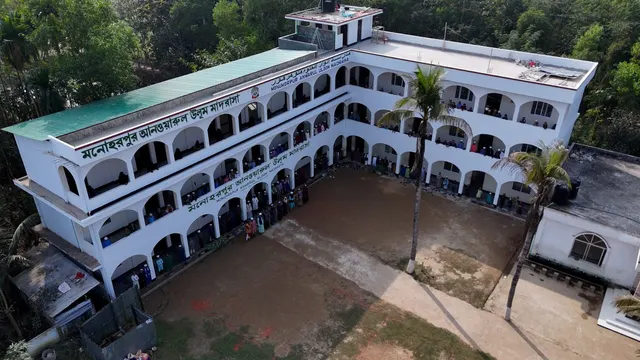
Once a student at Monuhorpur Anwarul Uloom Madrasa, Muftī Abdurraḥmān (ḥafiẓahullāh) now serves as its Shaikhul Ḥadīth and Principal. He oversees the curriculum across all four departments, manages the madrasa’s overall operations and supports its teachers in their work with students and the wider community in Sylhet.
Biography
Life and learning
Shaikhul Ḥadīth Mawlānā Muftī Abdur Raḥmān Monuhorpurī (ḥafiẓahullāh) is a senior scholar and Islamic thinker known for his expertise in ḥadīth and his work as a muftī and mufassir. He serves as Shaykh al-Ḥadīth at Dārul ʿUlūm Ford Square and Chief Muftī of Dārul Iftāʾ London. He is also a respected media commentator and serves Muslim communities in Britain and Bangladesh.
Birth and family
Muftī Abdur Raḥmān Monuhorpurī was born in 1965 in the village of Monuhorpur, Kulaura, Moulvibazar, Sylhet, Bangladesh. His father, the late Qārī Abdul Mannān Ṣāḥib (raḥimahullāh), was a pious elder whose devotion to Allāh shaped his daily life.
Hardship in his father’s childhood prevented him from completing the formal Dawra-e-Ḥadīth course. He nevertheless gained a deep knowledge of the Dīn and enjoyed the companionship of many respected elders. Muftī Abdur Raḥmān’s mother also came from an esteemed family known for its piety.
Education
He took his first lessons from his own father, then began his formal study of religious knowledge at the Monuhorpur Maktab under the guidance of Ḥaḍrat Maulānā ʿAbdul Majīd Shaykh-e-Dāʾūdpūrī (raḥimahullāh).
In 1971, Ḥaḍrat Maulānā ʿAbdul Majīd Dāʾūdpūrī (raḥimahullāh) founded Anwārul ʿUlūm Madrasa in Monuhorpur. Muftī Abdur Raḥmān enrolled there and received his primary Islamic education.
In Ramaḍān 1975, Muftī Abdur Raḥmān stayed with his maternal grandfather, whose home had long welcomed senior ʿulamāʾ for annual Islamic gatherings. At the nearby Fayḍ-e-ʿĀm Ismailpur Madrasa, Mawlānā Sikandar ʿAlī Ismailpurī (raḥimahullāh) held an intensive course each Ramaḍān in ṣarf (Arabic morphology) and naḥw (syntax). He had founded the madrasa and was known as the Imām of Ṣarf and Naḥw.
Muftī Abdur Raḥmān first attended the course with his maternal uncle, Mawlānā Aḥmad ʿAlī Ṣāḥib. During his first lesson, ʿAllāmah Ismailpurī recognised the young student’s aptitude and asked his uncle to bring him back the following day and every day thereafter. By the grace of Allāh and through diligent study, he mastered ṣarf in the few remaining days of Ramaḍān.
As a boy, Muftī Abdur Raḥmān loved trains. His maternal uncle, Mawlānā Aḥmad ʿAlī, was studying at Jāmiʿah Tawakkuliyya Renga in Sylhet, which at the time was only accessible by rail. Eager to make the journey with his uncle, he insisted on enrolling at Renga.
For his entrance examination, Muftī Abdur Raḥmān appeared before the Jāmiʿah’s Shaikhul Ḥadīth, ʿAllāmah Shihāb Uddīn (raḥimahullāh). He answered every question on ṣarf with precision. Pleased with his answers, ʿAllāmah Shihāb Uddīn remarked, “His ṣarf is entirely sound. Let him be admitted to Naḥw-e-Mīr.”
Muftī Abdur Raḥmān studied at Jāmiʿah Renga without interruption from Naḥw-e-Mīr through to Dawra-e-Ḥadīth. He excelled in naḥw, balāghah, manṭiq, fiqh, tafsīr and ḥadīth, among other Islamic sciences, and ranked first in his class each year.
In 1984/85 CE (1406 AH), Muftī Abdur Raḥmān completed his Takmīl fi’l-Ḥadīth, ranking first among all first-division students across the board.
On his teachers’ advice, Muftī Abdur Raḥmān continued his studies at Al-Jāmiʿatul Ahliyyah Muʿīnul Islām Hathazari Madrasa, where he completed advanced degrees in ḥadīth and iftāʾ.
Teaching career
Muftī Abdur Raḥmān began his career as a teacher and continues to teach today. Through decades of service to his students, he has distinguished himself as an exemplary teacher.
From 1986 to 1988, Muftī Abdur Raḥmān taught at Jāmiʿah Tawakkuliyya Renga, where he had studied. In 1988, he joined Jāmiʿah Madaniyyah Kazirbazar as a senior teacher, muḥaddith and muftī. He served there until 1996 and returned from 2001 to 2003, completing a total of ten years as Shaikhul Ḥadīth and Muftī.
Between his two terms at Kazirbazar, Muftī Abdur Raḥmān served as Chief Shaikhul Ḥadīth and Muftī at Jāmiʿah Islāmiyyah Dārul ʿUlūm Deulgram Madrasa from 1996 to 2000.
In 2003, Muftī Abdur Raḥmān moved to London. From 2003 to 2007, he served as Chief Shaikhul Ḥadīth and Muftī at Jāmiʿah Madīnatul ʿUlūm, Plaistow, and as senior imām and khaṭīb at Baitur Raḥmān Masjid, Manor Park.
Since 2007, Muftī Abdur Raḥmān has served as Chief Shaikhul Ḥadīth and Muftī at Dārul ʿUlūm Ford Square (London Islamic School and Madrasa). From 2007 to 2023, he also served as senior imām and khaṭīb at Shahjalal Masjid in Manor Park, London.
Since 2019, he has held the posts of Shaikhul Ḥadīth and Muftī at Jāmiʿah Al Rawḍa and Ṭaḥāwī Institute Madrasa. He continues to lead Jumuʿah prayers and deliver the khuṭbah at masjids across London.
Muftī Abdur Raḥmān is also a respected media commentator. He regularly hosts Alor Dishari, Iqra Bangla Islamic TV’s flagship live discussion and Q&A programme, as well as the channel’s ḥadīth programmes.
Wider responsibilities
As Amīr of Hefazat-e-Islam Bangladesh (UK), he brings together ʿulamāʾ from different schools of thought across the United Kingdom.
He is also the founding Chairman and Chief Muftī of Dārul Iftāʾ London, where he issues fatāwā in response to questions of Islamic law.
Tafsir of the Qur'an
Over twelve consecutive years, Muftī Abdur Raḥmān taught the tafsīr of the entire Qurʾān at his masjid. He also completed the Dars-e-Fiqh and Iftāʾ programmes over six years. Together, these achievements marked a rare distinction for a Bengali ʿālim in London.
On 24 August 2019, London’s ʿulamāʾ held a reception in his honour to mark this milestone. Scholars from across the UK and abroad joined them for the occasion.
Fatwa
As a student at Jāmiʿah Renga, Muftī Abdur Raḥmān regularly assisted ʿAllāmah Quṭub Uddīn Jahānpurī (raḥimahullāh) in preparing fatāwā. Through this work, he gained a thorough knowledge of the major collections of fatāwā, including Fatāwā Shāmī, Fatāwā ʿĀlamgīrī and Fatāwā Qāḍī Khān. During his teaching years at Jāmiʿah Kazirbazar and Jāmiʿah Deulgram, he held primary responsibility for issuing fatāwā.
After moving to London, he continued to issue fatāwā alongside his teaching and founded Dārul Iftāʾ London to give this work a permanent home. Each year, students complete the institute’s course in fiqh and iftāʾ, learning to apply Islamic law and issue rulings. Through the institute’s website, he continues to answer complex questions of Islamic law from Muslims around the world.
Bay'ah and khilafah
Muftī Abdur Raḥmān pledged bayʿah to Shaikhul Islām ʿAllāmah Shāh Aḥmad Shafī (raḥimahullāh), who later granted him khilāfah.
Hajj
Muftī Abdur Raḥmān had long hoped to perform Ḥajj and to make the pilgrimage possible for his parents. This was one of his main reasons for moving from Bangladesh to London. Soon after his arrival, he fulfilled his wish for his parents and later performed Ḥajj himself. By the grace of Allāh, he has now performed Ḥajj eight times.
In 2018, he performed ʿUmrah with his father, Qārī Abdul Mannān Ṣāḥib, who passed away shortly afterwards. Innā lillāhi wa innā ilayhi rājiʿūn.
May Allāh have mercy on his father, accept his Ḥajj and ʿUmrah, fill his grave with light and grant him Jannat al-Firdaws. Āmīn.
Today
Muftī Abdur Raḥmān continues to serve London’s Muslim community through his teaching, fatāwā and public addresses. On his visits to Bangladesh, he offers counsel and speaks at Islamic gatherings, madāris and masājid across the country. His years of service have earned him the respect of Bengali Muslim communities in Britain and across Europe.
May Allāh preserve him in good health, bless him with a long life in the service of the Dīn and allow generations to benefit from his knowledge. Āmīn.
Latest answers
Recent Q&A
Published answers grouped by language. Tap a question to read the full response.
-
Oaths and Vows
Paying kaffarah for a broken oath the Hanafi way
How we make sure kaffarah for a broken oath feeds ten eligible poor people, and how much each of them receives.
-
Can my zakat go to my parents?
No, you cannot give obligatory zakat to your parents. You can (and should) support them from your ordinary wealth.
-
What should I do if I repeatedly miss Fajr?
Make up (qada) the prayer as soon as you wake, then deal with the causes with a plan rather than guilt.
-
Does my intention for Qurbani need to be verbal?
The niyyah (intention) for Qurbani resides in the heart. Saying it aloud is recommended but not obligatory.
-
Ramadan and Fasting
রোজা অবস্থায় ভুলে পানি পান করলে কী হবে?
রোজা অবস্থায় ভুলে পানি পান করলে কী হবে?
-
আমার যাকাত কি বাবা-মাকে দেওয়া যাবে?
না, ফরজ যাকাত বাবা-মাকে দেওয়া যায় না। তাদের সাহায্য করুন আপনার সাধারণ সম্পদ থেকে, আর সেটা করাই উচিত।
-
বারবার ফজরের নামাজ ছুটে গেলে কী করব?
ঘুম থেকে উঠেই নামাজের কাযা পড়ে নিন। তারপর অপরাধবোধে না ভুগে, কেন ছুটে যাচ্ছে তা বুঝে পরিকল্পনা করে সমাধান করুন।
-
Ramadan and Fasting
ماذا يحدث إذا شربت الماء عن طريق الخطأ؟
ماذا يحدث إذا شربت الماء عن طريق الخطأ؟
-
هل يجوز إعطاء زكاتي لوالديّ؟
لا، لا يجوز أن تدفع زكاة المال الواجبة إلى والديك. عليك (ويستحبّ لك) أن تنفق عليهم من مالك المعتاد.
-
ماذا أفعل إذا فاتتني صلاة الفجر مراراً؟
اقضِ الصلاة فور استيقاظك؛ عالج الأسباب الجذرية بخطة لا بشعور الذنب.
-
Ramadan and Fasting
Que se passe-t-il si l'on boit de l'eau par inadvertance ?
Que se passe-t-il si l'on boit de l'eau par inadvertance ?
-
Ma zakat peut-elle aller à mes parents ?
Non, vous ne pouvez pas donner la zakat obligatoire à vos parents. Vous pouvez (et devez) les soutenir avec vos biens ordinaires.
-
Que faire si je manque régulièrement Fajr ?
Rattrapez (qada) la prière dès votre réveil, puis traitez les causes avec un plan plutôt qu'avec de la culpabilité.
-
Mon intention pour le Qurbani doit-elle être prononcée à voix haute ?
La niyyah (intention) du Qurbani réside dans le cœur. La prononcer à voix haute est recommandé, mais pas obligatoire.
-
Ramadan and Fasting
Que se passe-t-il si l'on boit de l'eau par inadvertance ?
Que se passe-t-il si l'on boit de l'eau par inadvertance ?
-
Ma zakat peut-elle aller à mes parents ?
Non, vous ne pouvez pas donner la zakat obligatoire à vos parents. Vous pouvez (et devez) les soutenir avec vos biens ordinaires.
-
Que faire si je manque régulièrement Fajr ?
Rattrapez (qada) la prière dès votre réveil, puis traitez les causes avec un plan plutôt qu'avec de la culpabilité.
-
Mon intention pour le Qurbani doit-elle être prononcée à voix haute ?
La niyyah (intention) du Qurbani réside dans le cœur. La prononcer à voix haute est recommandé, mais pas obligatoire.